

Doors in North Texas have a hard life. Heat, humidity swings, and clay soil that never stops moving it all adds up. If you’re dealing with a door that drags, catches, or just plain won’t close right, you’re not alone. Knowing how to fix a sticking door is one of the most useful home repair skills you can have, and in many cases it’s a genuine DIY job. But you need to get the diagnosis right first. Fix the wrong thing and you’ll be back at it in a month.
This guide walks through every cause and every fix, from the simple stuff to the scenarios where you’re better off calling someone.
Why Doors Stick: The Real Causes
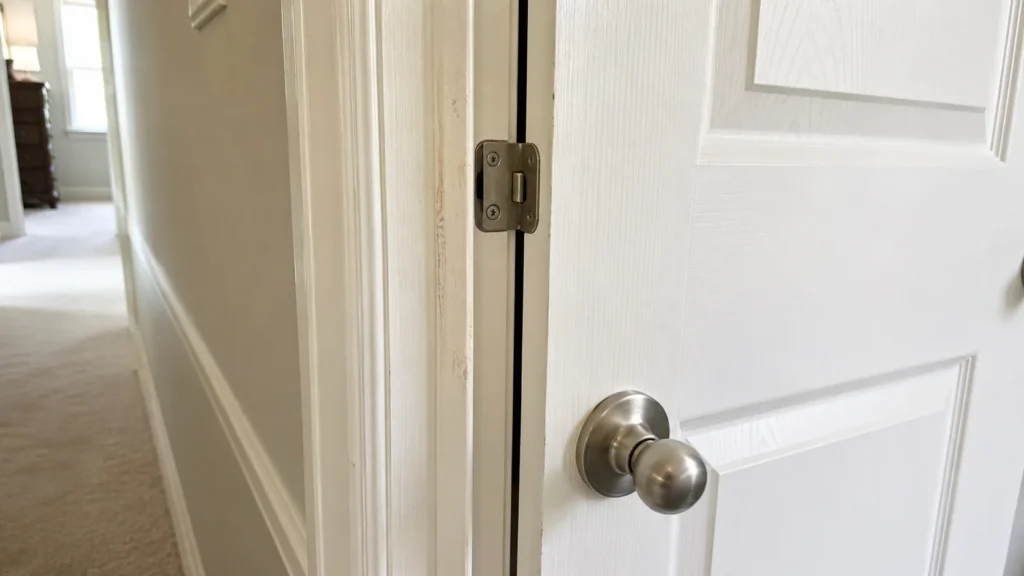
Most people assume it’s just humidity. And yes, wood expands when it absorbs moisture but in Frisco and the broader DFW area, there are at least four other things that cause doors to stick, and each one needs a different fix.
Humidity and Seasonal Wood Swelling
Wood is hygroscopic. That means it absorbs moisture from the air and expands. During humid Texas summers or after heavy rain, interior doors (especially hollow-core doors with wood frames) can swell enough to drag against the door jamb or the floor. The classic sign: the door sticks in summer and loosens up in winter.
If humidity is the cause, you’ll usually see the sticking happen along the top or the latch side of the door, not near the hinges.
Foundation Movement and Frame Racking
Here’s what most homeowners in Frisco don’t realize: a lot of sticking doors aren’t a door problem at all. They’re a foundation problem. North Texas clay soil expands and contracts dramatically with moisture changes. That movement shifts your home’s frame and when the frame moves, the door opening shifts with it. The door itself is fine. The opening is out of square.
If your door sticks at the top corner on the latch side, or if you can see a diagonal gap in the frame, foundation movement is likely the cause. This is extremely common in Frisco, Plano, Allen, and McKinney, newer construction included.
Loose or Worn Hinge Screws
Gravity does its work over time. The screws in your hinge leaf pull through the door jamb, the hinge shifts, and the door starts to sag. A sagging door typically sticks at the top latch corner or drags across the floor near the bottom on the latch side. Pull the door open and lift it slightly if it lifts noticeably and the sticking goes away, your hinges are the problem.
Paint Buildup
A fresh coat of paint on a door is great. But if someone painted the door without trimming the edges, or painted it while it was closed, you’ll end up with a sticky paint seal along the door stop or between the door face and the jamb. This is especially common in rental properties and older homes in Grapevine, Keller, and Southlake where doors have been painted multiple times.
Strike Plate Misalignment
If the door closes but the latch doesn’t catch cleanly, or you have to push the door hard to hear it click, the strike plate in the door jamb has probably shifted. The latch bolt isn’t lining up with the hole. This often happens alongside foundation movement, or just from years of use.
How to Know If a Door Is Jammed vs. Just Sticking
There’s a practical difference between a door that sticks and one that’s jammed. A sticking door drags or resists but still opens and closes. A jammed door won’t move without significant force or won’t move at all. Here’s a quick field test:
- Open the door fully and look at the gap between the door edge and the jamb. Is it consistent all the way around, or wider at the top and narrow at the bottom (or vice versa)?
- Look for rub marks; shiny spots or paint wear on the door edge or jamb show you exactly where contact is happening.
- Check the hinge side gap. If it’s paper-thin at one hinge and wide at another, a hinge is loose or failing.
- Try the latch. Does the bolt seat clean? Or does it catch on the strike plate lip?
Getting this right saves you from sanding or planning in the wrong spot.
How to Fix a Sticking Door: Step-by-Step by Cause
Fix 1: Tighten or Replace Hinge Screws
This is the first thing to try and it fixes more sticking doors than anything else.
- Open the door and support it (a wedge under the latch corner works well).
- Check each screw. If any turn without catching, the wood behind them is stripped.
- For stripped screws: Remove the screw, fill the hole with wooden toothpicks or a wooden golf tee coated in wood glue, let it dry, then re-drive the screw. This gives the threads something to bite into.
- For added strength on the top hinge: replace at least one screw with a 3-inch screw that reaches into the wall stud behind the jamb. That single longer screw can take a significant amount of stress off the hinge.
Test the door. If it no longer sags and closes cleanly, you’re done.
Fix 2: Adjust or Reposition the Strike Plate
If the latch bolt catches the top or bottom of the strike plate hole rather than entering cleanly:
- Unscrew the strike plate and remove it.
- Use a pencil to mark where the latch is actually hitting.
- Small misalignment (under 1/8 inch): File the strike plate opening slightly in the direction needed.
- Larger misalignment: Chisel or use an oscillating tool to reposition the mortise (the recessed area), move the plate, and fill the old screw holes before re-drilling.
If the misalignment is significant, something has shifted in the frame and you’re treating a symptom, not the cause.
Fix 3: Fix a Sticking Door Due to Humidity
This is where most DIY guides stop at “sand the door.” But there’s a better approach.
First, identify exactly where it’s sticking by sliding a piece of cardboard or paper around the door while it’s closed. Tight spots will resist the paper.
Next, check whether the door was ever sealed on the top and bottom edges. Raw, unpainted wood edges absorb significantly more moisture. Sealing the top edge (even if it’s just a coat of paint) can reduce swelling.
If the door needs material removed:
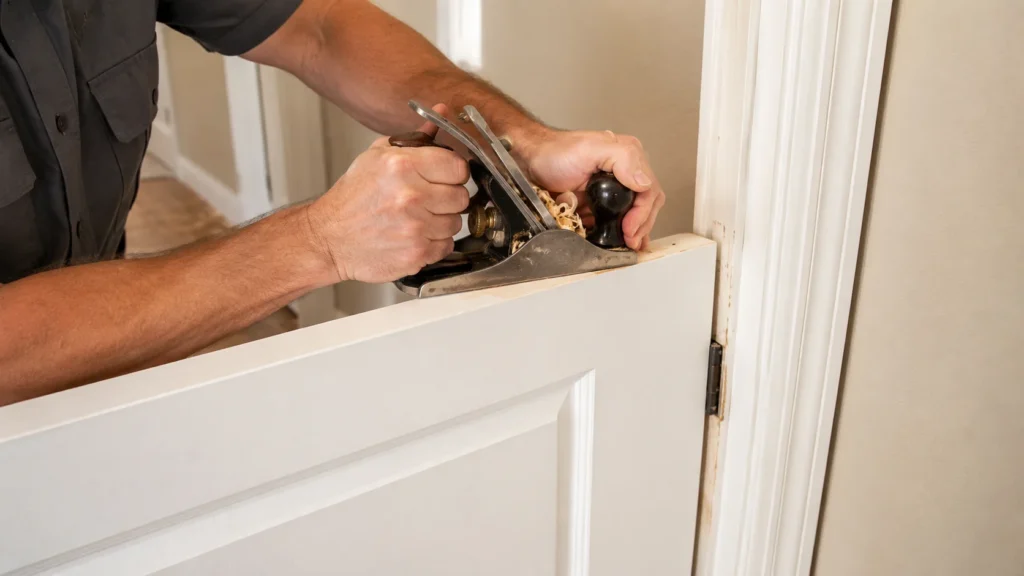
- Light sticking along the top edge: A hand plane or belt sander along the top rail. Work in small passes and test frequently.
- Sticking along the latch side: You’ll need to remove the door (pull the hinge pins) to work that edge properly.
- Important: Always seal the edge you’ve planed or sanded before rehinging. If you don’t seal it, moisture will get back in and you’ll be doing this again next summer.
On how to fix a door that sticks on top specifically: the top rail is usually the most accessible and easiest to work on with the door in place. Use a hand plane and work with the grain.
Fix 4: Remove Paint Buildup
If the door seals itself shut or binds against the door stop, look for paint bridging the gap. You can score along the door stop with a utility knife to break the paint seal. If there’s heavy buildup, strip the paint from the door stop and the door face in the binding area, then repaint properly (with the door open and paint dry before closing).
Fix 5: Foundation-Related Sticking
If the frame is racked from foundation movement, removing material from the door is a short-term fix. The opening itself isn’t square. For a proper repair, you’d need to address the frame, which means resetting the door jamb to match the new geometry of the opening.
That’s not always necessary. In many Frisco homes, the movement is gradual and seasonal. Trimming the door to fit the current opening works fine as long as it doesn’t get worse. But if you’re seeing new cracks around door frames, sticking that’s getting worse each season, or doors that no longer close at all, it’s worth having someone look at it properly.
Homeowners dealing with recurring door issues throughout the house, particularly in the SH-121 corridor from Frisco down through Plano and Allen, often find that the root cause is soil movement, not the doors themselves.
When to DIY and When to Call Someone
Most door repairs are reasonable DIY projects. But there are a few situations where calling someone saves time, money, and frustration:
- Multiple doors sticking at once; this points to foundation or framing movement, not individual door issues
- The door frame is visibly out of plumb; fixing the door without fixing the frame is cosmetic at best
- The door is exterior and the weatherstripping, threshold, or frame integrity is compromised; these affect your home’s energy performance and security
- The sticking came back within a season of the last repair; something structural is shifting
If you’re managing multiple properties in Frisco or the surrounding area, repair requests for sticking doors are worth batching. Getting a handyman out to address three or four doors in one visit is far more efficient than calling for each one separately.
Handyman Home Pros handles all of these scenarios for homeowners and property managers throughout Frisco, Plano, McKinney, Allen, Southlake, Keller, and Grapevine.
Seasonal Door Maintenance in North Texas
A little prevention goes a long way. Here’s what to stay on top of through the year:
- Spring: Inspect all exterior door frames for caulk failures after winter temperature swings. North Texas doesn’t get harsh winters, but the freeze-thaw cycles that do happen are hard on caulk lines and door frame sealant.
- Summer: Expect some swelling on interior doors during peak humidity. If a door starts to drag, don’t immediately plane it, give it a week of air conditioning first to see if it settles.
- Fall: Check all hinge screws and tighten as needed. Look at the strike plates on exterior doors to make sure they’re seating properly heading into winter.
- After any significant rain event: Frisco’s clay soil can shift noticeably after a major rain cycle. If doors that were fine suddenly start sticking, check for any new cracks around frames or baseboards.
Exterior doors also benefit from regular inspection of the threshold seal and door jamb condition. Keeping moisture out of the frame is far easier than repairing damage after the fact. If you’re looking for an extra layer of protection around your home’s exterior, including doors and frames, that kind of weatherproofing work pairs well with a broader home protection check-up.
HOA Considerations in Frisco
Most Frisco HOAs don’t have rules about interior door repairs, but exterior doors are another matter. If you’re replacing an exterior door or changing the color of a front door, check with your HOA before you start. Many communities along the SH-121 corridor have approved color palettes and require matching hardware finishes. A repair that stays within the existing door and frame won’t require approval, but any visible change to the exterior may.
Property managers handling units in HOA communities should keep this in mind when scheduling repairs. A quick call to the HOA management office before any exterior door work avoids the kind of compliance headaches that are expensive to fix after the fact.
Conclusion
Most sticking doors have a simple fix if you know what’s actually causing the problem. Start with the hinges. Check for paint buildup. Look at whether the frame is square before you start removing material. And if you’re in Frisco or anywhere in the DFW area, keep foundation movement on your radar, especially after a wet season.
Knowing how to fix a sticking door is genuinely useful. But there’s also no shame in getting help from Handyman Home Pros for repairs that involve a frame that’s shifted, multiple doors across a property, or any exterior door where getting it wrong affects security or energy efficiency.
FAQs
Why does my door only stick during summer in Texas?
Humidity is usually the cause. Wood absorbs moisture from the air and expands slightly, especially during humid North Texas weather. That’s why many homeowners search for how to fix a door that sticks due to humidity after rainy weeks or heat waves.
Can loose hinge screws really cause a sticking door?
Yes. Loose hinge screws let the door sag out of alignment, which creates rubbing at the top corner or along the latch side. Tightening or replacing the screws often fixes the issue without sanding anything.
How do I know if foundation movement is affecting my doors?
If several doors suddenly stick at the same time, you notice drywall cracks, or floors feel uneven, foundation movement could be involved. This is common in Frisco because clay soil expands and contracts with moisture changes.
Should I sand or plane a sticking door myself?
Only after checking the hinges and alignment first. Too much sanding can permanently damage the fit of the door. Small adjustments work better than aggressive trimming in most cases.
What’s the best way to fix a door that sticks on top?
Usually, replacing the top hinge screw with a longer 3-inch screw helps pull the door back into position. Homeowners searching how to fix a door that sticks on top are often dealing with minor sagging rather than a damaged frame.