

If you landed here after solving the NYT crossword, here is your solution: STORMDOOR. That term describes an extra barrier designed to protect a house against bad weather on November 25, 2025 and could provide answers in crossword puzzles; but for homeowners located along the DFW corridor such as Frisco it could represent more than a simple crossword victory. It’s a practical home improvement decision worth thinking seriously about.
An extra barrier to protect a house from bad weather isn’t just trivia. In North Texas, where hailstorms roll through Frisco in spring, summer temps push past 105°F, and cold snaps hit hard enough to freeze pipes overnight, your home’s exterior doors are working harder than most people realize.
What Is a Storm Door and Why Does It Matter?
A storm door is a secondary outer door installed in front of your main entry door. It creates an insulating air gap between the two doors, adds a physical layer against wind and rain, and protects your expensive primary door from the elements year-round.
But here’s what most homeowners don’t think about: your front door takes a beating every single day. The Texas sun fades. Wind-driven rain pushes moisture into the door frame. And in Frisco neighborhoods with HOA-mandated entry aesthetics, a warped or weather-damaged door is a problem you don’t want to deal with later.
How a Storm Door Works as a Thermal Envelope Layer
Think of your home’s exterior as a thermal envelope, the combination of walls, roof, windows, and doors that separates conditioned air inside from the weather outside. Every gap in that envelope costs you money on your energy bill.
A storm door tightens that envelope at one of its weakest points: the entry door. The sealed air pocket between the storm door and main door acts as insulation. During a Frisco summer, that gap keeps radiant heat from baking your front door and pushing warmth into your entryway. In winter, it slows heat loss on cold nights when a blue norther rolls in without warning.
Real Weather Threats Frisco Homeowners Face
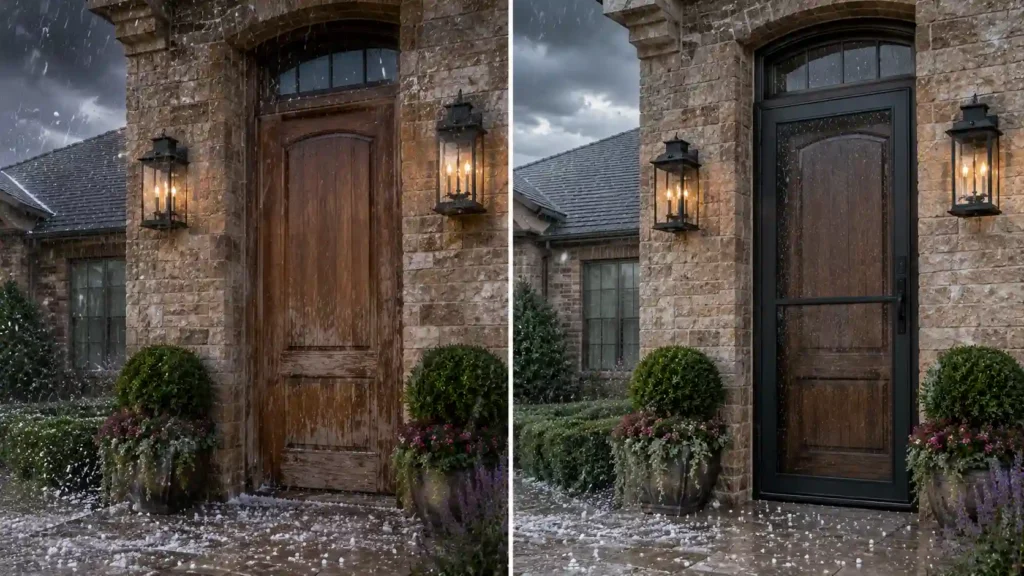
North Texas isn’t gentle on homes. If you’ve lived in Frisco, Allen, McKinney, or Plano for more than a couple of years, you already know this. But it’s worth laying out exactly what your exterior doors are up against.
Hail and Wind-Driven Rain
Frisco sits in a high-hail corridor. Spring storms regularly bring golf ball-sized hail and winds that push rain horizontal. A storm door catches most of that punishment instead of your main entry door. The glass panel absorbs impact; the aluminum or steel frame deflects water from the door frame and threshold.
Summer Heat and UV Damage
The UV index in North Texas from May through September is brutal. Exterior paint fades. Caulk lines dry out and crack. Wood door panels split. A storm door with a full-view or retractable screen keeps direct sun off your primary door and extends its life by years. That matters a lot if your front door is a solid wood or fiberglass unit that costs $800 or more.
Temperature Swings and Vapor Barrier Concerns
Texas sees extreme temperature swings sometimes 50 degrees in 24 hours. That thermal cycling causes expansion and contraction in door frames, which is why vapor barrier integrity matters around entry points. When the seal between your door frame and rough opening degrades, moisture follows. A well-installed storm door helps buffer that cycle and slows moisture infiltration into the wall cavity.
Types of Storm Doors Worth Knowing About
Not all storm doors are the same. Here’s a quick breakdown:
- Full-view storm doors: Large glass panel, great visibility, popular in Frisco HOA neighborhoods where curb appeal matters. Retractable screen options available.
- Mid-view storm doors: Glass panel on top, solid panel on bottom. Better for homes with pets or high foot traffic.
- High-view storm doors: Smaller glass panel up top, more solid surface below. More privacy, slightly more insulation.
- Security storm doors: Reinforced frame and deadbolt-ready. Worth considering if you’re a property or business owner managing a rental or commercial space.
For most homes in Frisco and surrounding areas like Southlake, Keller, and Grapevine, a full-view or mid-view door in a powder-coated aluminum frame hits the sweet spot: it looks clean, holds up to the weather, and satisfies most HOA requirements.
Installing a Storm Door: What the Process Actually Looks Like
This isn’t a complicated job, but it’s also not a good DIY project for most homeowners. Here’s why.
The door has to be plumb, level, and square; or it won’t seal correctly. If the rough opening has shifted (and in North Texas, clay soil foundation movement is common enough that door frames shift slightly over time), you need to correct that before hanging the new door. A crooked install means gaps, drafts, and a door that either sticks or won’t latch.
A proper storm door installation includes:
- Measuring the opening height, width, and checking for square
- Removing the old storm door if present, inspecting the door frame for rot or damage
- Installing the door frame/Z-bar against the exterior door casing
- Hanging the door, adjusting hinges, and verifying the sweep seal sits flush
- Installing the closer mechanism (pneumatic or hydraulic)
- Sealing the perimeter with exterior-grade caulk
The whole job takes a skilled handyman two to three hours. Done right, it looks clean and functions for 15 to 20 years without issues.
Other Barriers Worth Adding for Full Weather Protection
A storm door is your primary extra barrier to protect a house from bad weather at entry points. But it’s one piece of a bigger picture. Here are the other layers worth thinking about:
Weatherstripping and Door Sweeps
The door sweep is the rubber seal along the bottom of your door. When it wears out and in Texas heat, they wear out faster than in cooler climates you get drafts, insects, and dust coming in under the door. A new sweep costs next to nothing. The labor to swap it out takes 20 minutes.
Window Caulking and Sealing
Windows are the second biggest source of air and water infiltration. Cracked or shrinking caulk lines around window frames are one of the most common things we see in Frisco homes that are three to five years old. The Texas heat degrades caulk faster than most homeowners expect. Resealing every two to three years keeps moisture out of wall cavities and helps maintain your home’s air barrier integrity.
Exterior Paint and Fascia Board Condition
Your fascia board takes direct sun and water exposure where the roof meets the wall. When the paint fails, wood rot follows. It’s a slow process, but by the time it’s visible it’s usually already a repair job rather than a maintenance task. Keeping up with paint on exterior trim, fascia, soffits, window trim is one of the most effective long-term protections your home has.
For homeowners who want a professional set of eyes on all of this, the team at Handyman Home Pros handles storm door installation, weather-stripping, caulking, and exterior trim repair across Frisco, Plano, Allen, McKinney, and the broader DFW area.
Which Protection Systems Actually Matter Most?
Not every home needs every upgrade.
Here’s a practical breakdown homeowners in Frisco usually find most valuable.
| Protection Upgrade | Best For | Main Benefit |
|---|---|---|
| Air barrier sealing | Older homes | Lower energy loss |
| Vapor barrier | Moisture-prone areas | Mold prevention |
| Flood panels | Low drainage lots | Water protection |
| Reinforced doors | Wind and security concerns | Better structural resistance |
| Plastic root barrier | Mature landscaping | Foundation protection |
| Exterior caulking refresh | Most homes | Prevents water intrusion |
The best approach is layering smaller protections together.
That’s usually more cost-effective than waiting for a major repair.
When Is a Storm Door Enough vs. When Do You Need More?
Honest answer: for most Frisco homes, a properly installed storm door handles the vast majority of weather exposure at your entry point. But there are situations where more is needed.
If your home has experienced flooding, you’re thinking about flood gates or panels for low-lying entry points or garage doors. Those are a different product category entirely, designed to hold back water rather than block wind and rain.
Conclusion
The answer to the NYT crossword clue, the extra barrier to protect a house from bad weather is STORMDOOR. But for homeowners in Frisco and across the DFW area, it’s much more than a puzzle answer. It’s a practical investment that protects your primary door, tightens your home’s thermal envelope, reduces energy loss, and adds a layer of weather defense that pays off in North Texas’s demanding climate.
Weather protection at an entryway is one of the highest-value, lowest-drama home improvements available to you. To have it done right on the first attempt, contact Handyman Home Pros in Frisco, McKinney, Plano, Allen Southlake Keller Grapevine along the Highway 121 corridor for an estimate.
FAQs
What is the best extra barrier to protect a house from bad weather?
The best option depends on the problem you’re trying to solve. In Frisco, homeowners usually benefit most from air barriers, reinforced door systems, vapor barrier upgrades, and better exterior sealing because of heat, wind, and heavy storms.
Does a plastic root barrier really help protect foundations?
Yes, especially in neighborhoods with mature trees. A properly installed plastic root barrier can redirect root growth away from foundations, sidewalks, irrigation systems, and patios before damage becomes expensive.
Are flood panels worth installing in North Texas?
For homes with drainage issues or low garage entry points, they can help a lot. Heavy storms in DFW create fast runoff, and removable flood gates or panels add another layer of water protection during severe weather.
Why do Frisco homes develop cracks around doors and windows?
Texas clay soil expands and contracts with moisture changes. That movement stresses framing, drywall, and caulk joints over time. Wind and heat make the problem worse if the home lacks a strong thermal envelope and proper sealing.
Can handyman services help with weather protection upgrades?
Yes, many preventive upgrades fall within handyman’s scope. That includes sealing gaps, replacing weather-stripping, repairing fascia boards, fixing trim damage, improving drainage flow, and reinforcing entry points for better protection from wind and moisture.