

Have you decided it is time to replace the sliding glass door at the back of your house? Perhaps its frame has warped, its seal is fogging over or it just no longer glides smoothly enough, now comes the hard part for most homeowners: choosing which size door.
Standard sliding glass door size in most homes are 6 feet wide by 6 feet 8 inches in height, 72 inches wide and 80 inches high respectively, but that is just the starting point! Your options could range anywhere between 60 inches wide to 144 inches wide, while height could reach up to 96 inches depending on your home construction and design. Ordering incorrect sizes could result in delays, return freight charges and framing work unplanned for; let us ensure it happens first time round!
Standard Sliding Glass Door Dimensions: What the Numbers Actually Mean
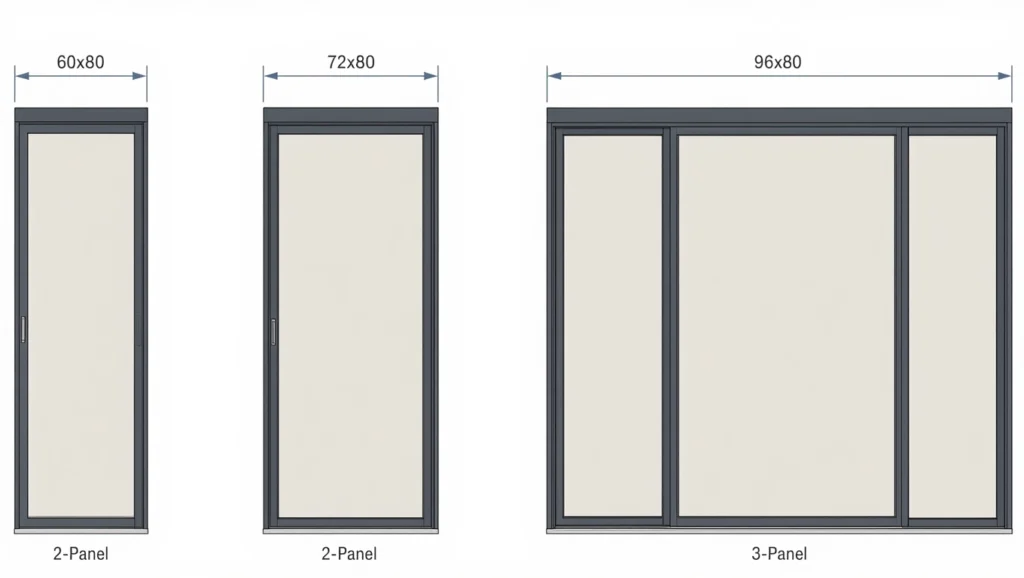
Here’s where people get confused. When a door is listed as a “72 x 80,” that refers to the rough opening size, the framed hole in the wall, not the door unit itself. The actual door unit typically runs about a half-inch to three-quarters of an inch smaller on each side to allow for shimming, leveling, and frame tolerances.
Common Standard Sliding Glass Door Sizes
The most widely available standard patio door sizes are:
- 60 x 80; a two-panel door with one fixed panel and one sliding panel, best for smaller openings; common in older ranch-style homes
- 72 x 80; the most common standard sliding glass door size in U.S. residential construction; fits most back patio openings in Frisco and across DFW
- 96 x 80; three-panel or wide two-panel doors; popular in newer construction with larger living rooms that open to covered patios or pool decks
- 144 x 80; four-panel bypass door configurations; found in high-end homes with wide open-plan living areas
Height runs at 80 inches as the true standard. Some homes, especially newer builds in Frisco’s master-planned communities, have 8-foot or even 9-foot ceilings, which require doors ranging from 80 to 96 inches tall. That height bump changes your rough opening, so always verify before you order.
What “Panel Count” Means for Your Opening
A two-panel sliding glass door has one panel that’s fixed and one that slides. A four-panel bypass door has two sliding panels that move past each other. More panels generally means a wider door unit and a larger rough opening. If you’re replacing an existing door, panel count usually stays the same unless you’re planning to resize the opening, which is a separate carpentry job.
How to Measure Your Existing Sliding Patio Door Correctly
Don’t measure the glass. Don’t measure the door slab. Measure the rough opening, the framed opening in the wall, not the finished trim or brick mold.
Step-by-Step Measurement Guide
- Remove the interior trim (or carefully pull it back) to expose the rough framing on both sides and the header above.
- Measure the width of the rough opening at the top, middle, and bottom. Use the smallest measurement.
- Measure the height from the rough sill to the underside of the header at both sides. Use the smallest measurement.
- Check for plumb and level. If the opening is out of square by more than 3/8 of an inch, you’ll need to re-frame before the new door goes in.
- Note the framing material. Wood stud framing is straightforward. Older homes with masonry or steel framing require different installation methods and hardware.
One thing worth mentioning for homes in Frisco and the broader DFW area: Texas clay soil shifts. Foundation movement is common here, and that movement can cause door frames to rack slightly out of square over time. If your existing door has been sticking, binding, or leaving visible gaps at the corners, measure extra carefully and don’t assume the opening is still true.
Standard vs. Custom Sized Sliding Glass Doors
If your rough opening matches one of the standard widths, 60, 72, or 96 inches wide, 80 inches tall, you’re in good shape. Standard-size doors are in stock at most lumber yards and home centers, lead times are short, and installation hardware is widely available.
But if your opening is an odd size, say, 68 inches wide or 84 inches tall, you’re looking at a custom sliding glass door, which means longer lead times (often four to eight weeks), significantly higher material costs, and installation that requires more precision. If your opening is close to a standard size, it’s often cheaper to re-frame slightly and use a standard door unit than to go custom.
When Frisco Homeowners Should Consider Custom Sizing
- You’re opening up a wall and want to maximize the view or natural light
- Your existing door is a non-standard legacy size from 1970s or 1980s construction
- You’re adding a door to an exterior wall where no opening currently exists
- HOA design standards in your neighborhood require specific panel dimensions or glass-to-frame ratios
Speaking of HOAs, many Frisco-area communities (from Starwood to Stonebriar to The Hills of Kingswood) have architectural guidelines that apply to exterior modifications, including patio doors. The finish, frame color, and glass type may all need to match the existing home exterior or meet a community standard. Always check before you buy.
Height Matters More Than Most People Think
The 80-inch tall door is the baseline for most production homes. It’s what fits a standard 8-foot ceiling with room for header framing above. But here’s what trips people up: if your home has a raised header, a cathedral ceiling in the adjacent room, or was built with taller door openings as a standard feature (common in newer Frisco builds), you may need a 96-inch tall door unit.
Tall doors look great. They’re popular right now. But they require more framing support above the opening, and the glass panels are heavier, which means the track and roller hardware has to handle more load. A door installed without the right header support or with undersized rollers will sag and bind within a few years.
If you’re working with Handyman Home Pros on a patio door installation, getting the rough opening framed correctly before the door unit arrives is the part that separates a smooth job from a frustrating one.
Energy Efficiency and Glass Options: What to Know for North Texas
In Frisco, summer afternoons get brutal. Sustained heat over 100°F is normal July through September, and a west- or south-facing sliding glass door with poor glazing will let heat pour into your living room. That means your AC works harder and your energy bills spike.
When you’re choosing a standard patio door, look for these ratings:
- Low-E glass coating: Reflects infrared heat while still letting in visible light
- Dual-pane or triple-pane insulated glass units: Standard in most modern doors; triple-pane is worth considering for west-facing exposures
- SHGC (Solar Heat Gain Coefficient): For Texas, a lower SHGC (0.25 or below) reduces cooling load
The caulk line around the door frame matters too. North Texas heat causes expansion and contraction of framing materials through the seasons, and exterior caulk around door frames tends to crack and separate faster here than in milder climates. Plan to inspect and re-caulk the perimeter every two to three years.
What to Check Before Installation Day
Once you’ve confirmed your rough opening dimensions and ordered the right door, a few things need to be ready before installation begins.
- The subfloor or slab at the threshold should be level (within 1/8 inch across the width)
- The rough opening should be plumb and square
- A sill pan flashing or pan flashing kit should be in place to direct any water infiltration away from the framing
- The interior finish floor (if tile or hardwood) should already be installed up to, but not overlapping, the rough opening
If any of these aren’t right when the door arrives, the installation stalls. For homeowners across Frisco, Plano, Allen, McKinney, and Southlake, scheduling the prep work before the door delivery date saves everyone time.
When to Call a Pro vs. DIY
Swapping a like-for-like standard patio door, same rough opening, same panel count, same size, is within reach for a skilled DIYer. You need a helper (these units are heavy), basic carpentry tools, and a full afternoon.
But if any of these apply, it’s worth calling in a professional:
- The opening needs to be re-framed or resized
- The existing header is undersized for the new door’s weight or span
- There’s visible water damage or rot in the sill, framing, or adjacent drywall
- You’re installing into a wall you haven’t verified as non-load-bearing
- You want the door leveled, shimmed, and adjusted so it glides smoothly from day one
A poorly hung sliding glass door is one of those things that seems fine at first and then slowly gets worse. The latch doesn’t engage cleanly. The panels stick in winter. You end up living with it for years before calling someone to fix it right.
For a look at the full range of door and carpentry work available to Frisco-area homeowners, the handyman services break it down by job type.
Conclusion
Getting the standard sliding glass door size right before you buy saves you money, time, and a return freight headache. 72×80 is the standard residential construction size; however, your opening, ceiling height and framing condition all play into that decision. When taking measurements for framing purposes always measure your rough opening rather than door or glass as this ensures your frame remains square before ordering any doors or frames.
If you’re dealing with a non-standard opening, foundation-related frame racking (common with Frisco’s clay soil), or you just want the job done correctly the first time, reach out to Handyman Home Pros. We handle door installations and framing prep across Frisco, Plano, McKinney, Allen, Southlake, Keller, and the surrounding DFW area. A door that slides right, seals tight, and holds up to Texas summers is worth doing properly.
FAQs
What is the most common standard sliding glass door size for a residential home?
The 72 x 80; 72 inches wide and 80 inches tall, is the most common standard sliding glass door size found in U.S. homes.
How do I know if I need a custom sliding glass door?
If your opening doesn’t match standard sliding glass door sizes, or the frame shifted from settling, you may need a custom sized replacement. Homes with expanded patios or oversized backyard openings also commonly use custom options.
Are sliding glass patio doors energy efficient?
Modern sliding glass patio doors are much more efficient than older models. Double-pane glass, Low-E coatings, and improved seals help reduce heat transfer during North Texas summers.
Can foundation movement affect a patio door?
Yes. Frisco homes often experience minor shifting because of Texas clay soil. That movement can throw the door frame slightly out of square, causing sticking, locking problems, or uneven gaps around the door.
What’s the difference between a bypass door and a standard sliding door?
A bypass door uses overlapping tracks where one panel slides behind another. Standard panel sliding glass door systems usually include one fixed panel and one moving panel for patio access.